How to Improve Industrial Temperature Controls with PID Algorithms
Understanding PID Control in Temperature Management
What is PID Control and How Does it Work?
PID control, short for Proportional-Integral-Derivative control, stands as a cornerstone technique in industrial temperature management. This control method relies on continuously calculating an error value as the difference between a desired set point and a measured process variable. PID controllers adjust their output based on three distinct parameters: proportional, integral, and derivative. The proportional component generates an output value that is proportional to the current error. The integral component accounts for past errors, aiming to eliminate the residual steady-state error that can occur. The derivative component predicts future error based on its rate of change, providing a damping effect that stabilizes the system.
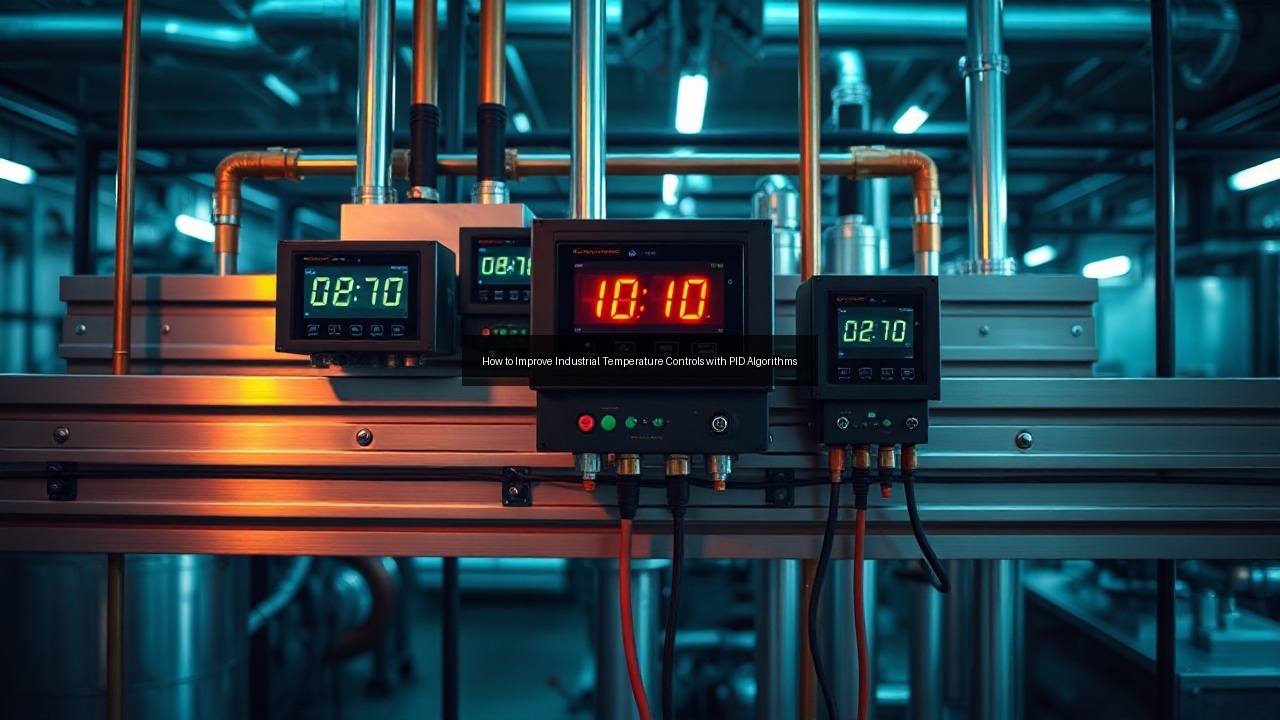
In industrial applications, PID control enhances temperature regulation by providing rapid and precise adjustments, reducing overshoot and oscillation. As a result, industries ranging from food processing to chemical manufacturing rely on PID controllers to maintain optimal conditions. DIN-rail controls By implementing PID algorithms, organizations can ensure consistent quality in their processes, enhance efficiency, and reduce energy consumption.
Benefits of PID Algorithms in Industrial Applications
PID algorithms offer numerous advantages in industrial temperature controls. Firstly, they provide real-time adjustments, allowing systems to respond swiftly to changes in temperature. This capability is crucial in processes where maintaining a specific temperature is vital for product quality and safety. Secondly, PID controllers enhance process stability. By minimizing fluctuations around the set point, these controllers ensure that operations run smoothly, which is essential in environments where precise temperature control is necessary.
Moreover, PID algorithms contribute to energy efficiency. By optimizing the heating and cooling processes, industries can significantly reduce energy consumption, leading to lower operational costs. Additionally, the flexibility of PID controllers allows for easy integration with various measurement devices, such as thermocouples and infrared sensors, enhancing their applicability across different industrial settings. Overall, the benefits of PID algorithms make them an indispensable tool for modern industrial temperature management.
Key Components of a PID Controller
Understanding the key components of a PID controller is essential for effective temperature management. The controller itself serves as the brain of the operation, processing the input from temperature sensors and generating the necessary output to control heating or cooling devices. The most common types of sensors used include thermocouples and infrared sensors, each offering unique advantages in temperature measurement.
Another critical component is the tuning parameters: proportional gain (Kp), integral gain (Ki), and derivative gain (Kd). These parameters require careful calibration to ensure optimal performance. The proportional gain adjusts the controller's response based on the current error, while the integral gain focuses on the accumulation of past errors to eliminate steady-state offsets. The derivative gain anticipates future trends, helping to dampen the response and prevent oscillations. Together, these components work synergistically to achieve precise temperature control in industrial processes.
Selecting the Right Process Temperature Controller
Types of Controllers: Panel-Mount vs. DIN-Rail vs. Surface-Mount
Selecting the appropriate process temperature controller involves understanding the various mounting styles available. Panel-mount controllers offer a robust solution for integration into control panels, allowing for centralized monitoring and control. These controllers typically feature larger displays and user-friendly interfaces, making them ideal for applications requiring frequent adjustments and monitoring.
DIN-rail controllers, on the other hand, provide a compact option for industrial environments with limited space. These controllers can be easily mounted on standard DIN rails, facilitating quick installation and maintenance. They are particularly advantageous in settings where multiple controllers are needed, as they save valuable space while maintaining functionality.
Surface-mount controllers offer flexibility for applications where installation space is not confined to panels or rails. These controllers can be directly attached to equipment, making them suitable for localized temperature control. Understanding the specific requirements of your application will guide you in choosing the best mounting style for your process temperature controller.
Configurable Inputs and Outputs: Customizing Your Setup
Configurable inputs and outputs play a vital role in customizing your process temperature controller setup. Many modern PID controllers offer the ability to tailor the system to specific operational needs. For instance, you can select different types of inputs, such as thermocouples or RTDs, to suit the measurement requirements of your application. This flexibility ensures that the controller accurately captures temperature data, leading to precise control.
Output options also vary, allowing for integration with various heating and cooling devices. Controllers may feature relay outputs, analog signals, or digital communication protocols like RS-485 and Modbus, enhancing automation capabilities. By customizing inputs and outputs, operators can create a comprehensive temperature control system that aligns with their industrial processes, improving both efficiency and reliability.
Comparing Measurement Methods: Thermocouples vs. Infrared Sensors
Temperature measurement methods significantly influence the accuracy and effectiveness of temperature control systems. Thermocouples remain a popular choice due to their wide temperature range, durability, and cost-effectiveness. They operate based on the thermoelectric effect, generating a voltage that corresponds to temperature changes. This makes them suitable for various industrial applications.
Infrared sensors, however, provide a non-contact measurement option, which is advantageous in processes where physical contact with the object is impractical or could alter its temperature. These sensors detect infrared radiation emitted by an object, allowing for quick and accurate temperature readings without interference. While they may have limitations in terms of surface emissivity and distance from the target, infrared sensors excel in applications requiring rapid feedback and minimal disruption.
Ultimately, the choice between thermocouples and infrared sensors depends on the specific requirements of your application, including temperature range, response time, and installation considerations. Evaluating these factors will lead to more effective temperature measurement and control.
Implementing and Calibrating PID Controllers
Best Practices for Calibration of Temperature Controls
Calibration of PID controllers is critical for ensuring accurate temperature control. Following best practices during calibration helps achieve optimal performance and reliability. Begin with a clear understanding of the desired temperature range and the characteristics of your process. Select a reference temperature measurement device with high accuracy, such as a calibrated thermocouple, to serve as the standard.
Conduct the calibration in a controlled environment, allowing for minimal external interference. Adjust the PID parameters—Kp, Ki, and Kd—based on empirical data obtained during testing. Utilize a systematic approach to fine-tune these values, monitoring the system's response to variations in temperature. Regularly recalibrating the controller, especially after significant changes in process conditions or after maintenance, ensures ongoing accuracy and precision.
Ensuring Accuracy and Precision in Measurements
Accuracy and precision are essential for effective temperature control in industrial settings. These two aspects directly impact product quality, safety, and compliance with industry standards. To achieve accuracy, select high-quality sensors that match the temperature range and application requirements. Regular verification against calibrated reference instruments helps maintain measurement integrity.
Consider implementing redundancy in critical applications, using multiple sensors to cross-check measurements. This practice minimizes the risk of relying on a single point of failure. Precision involves the repeatability of measurements; thus, ensuring consistent sensor performance through routine maintenance and calibration is vital. By prioritizing accuracy and precision, industries can enhance their temperature control systems and improve overall operational efficiency.
Automation and Integration with RS-485 and Modbus
Automation has revolutionized industrial temperature control, and integrating PID controllers with communication protocols like RS-485 and Modbus enhances this capability. These protocols facilitate seamless communication between controllers and monitoring systems, enabling real-time data exchange and remote access to temperature control settings.
Using RS-485 allows for long-distance communication, making it suitable for extensive industrial setups. Modbus further simplifies integration by providing a standardized communication protocol that supports various devices. This interoperability enhances automation, allowing operators to monitor multiple processes from a centralized location. Implementing these technologies leads to increased efficiency, reduced downtime, and improved decision-making in temperature management.
Enhancing Process Controls with Advanced Features
Temperature and Humidity Control in Industrial Settings
Controlling both temperature and humidity is crucial for many industrial processes. These parameters are interrelated and can significantly affect product quality. Advanced PID controllers now offer integrated humidity control features, allowing for a comprehensive approach to environmental management. Maintaining optimal humidity levels ensures that temperature-sensitive materials, such as pharmaceuticals and food products, remain stable throughout processing and storage.
By employing advanced sensors and controllers, industries can achieve precise control over both temperature and humidity, reducing spoilage and enhancing overall product integrity. These systems can be programmed to respond dynamically to changes in humidity, adjusting temperature settings as necessary to maintain ideal conditions. The integration of temperature and humidity control features represents a significant advancement in process management, driving efficiency and quality in various sectors.
Choosing Heater Control Equipment for Optimal Performance
Heater control equipment plays a vital role in temperature management within industrial processes. Selecting the right equipment ensures optimal performance and energy efficiency. Consider the type of heating technology required for your specific application—options include electric, gas, or steam heating systems. Each technology presents unique advantages and challenges, influencing the choice of control equipment.
Additionally, evaluate the compatibility of your heater control equipment with the chosen PID controller. Ensure that the controller can accommodate the desired output type, whether it be relay, analog, or digital signals. Properly matched equipment not only enhances the effectiveness of temperature control but also extends the lifespan of the entire system, minimizing maintenance costs and downtime.
Future Trends in Temperature Control Technologies
The landscape of temperature control technologies continues to evolve, driven by advancements in automation, data analytics, and machine learning. Future trends point towards increased integration of IoT (Internet of Things) capabilities, enabling real-time monitoring and control over temperature management systems. This connectivity allows for predictive maintenance, reducing the risk of equipment failures and optimizing operational efficiency.
Additionally, the development of smart sensors and advanced algorithms will enhance the precision of temperature control, allowing for more adaptive and responsive systems. Industries will benefit from reduced energy consumption and improved quality assurance PID controller options through these innovations. As technology progresses, companies must stay informed about emerging trends in temperature control to leverage the full potential of their processes and maintain a competitive edge.
See Also
- Calibrating Your Process Temperature Controller for Maximum Accuracy
- Temperature Control Strategies for Different Mounting Styles
- Calibrating Your Success with Accurate Temperature Measurement and Control Solutions
- Maximizing Efficiency with PC-Programmable Temperature Controllers
- Configurable Inputs and Outputs in Modern Temperature Controllers